


Hastelloy
Hastelloy B2
Quantity:
Hastelloy B2
Information grade: Hastelloy B-2 Hastelloy
US grade: UNS N10665
German brand: W.Nr.2.4617
Information grade: Hastelloy B-2 Hastelloy
US grade: UNS N10665
German brand: W.Nr.2.4617
1. Overview of Hastelloy B2 (N10665, 2.4617) Hastelloy:
Hastelloy B2 (N10665, 2.4617) Hastelloy is a corrosion-resistant, solid solution nickel-molybdenum alloy.
1. Hastelloy B2 (N10665, 2.4617) Hastelloy has the following characteristics:
(1) Control the content of iron and chromium elements at the lowest level to block the formation of β-phase Ni4Mo.
(2) Excellent corrosion resistance to reducing environments.
(3) Excellent corrosion resistance to medium-concentration sulfuric acid and many non-oxidizing acids.
(4) Very good resistance to ammonia ion reduction stress corrosion cracking (SCC).
(5) Excellent resistance to corrosion by various organic acids.
2. Hastelloy B2 (N10665, 2.4617) Hastelloy chemical composition: %
1. Hastelloy B2 (N10665, 2.4617) Hastelloy has the following characteristics:
(1) Control the content of iron and chromium elements at the lowest level to block the formation of β-phase Ni4Mo.
(2) Excellent corrosion resistance to reducing environments.
(3) Excellent corrosion resistance to medium-concentration sulfuric acid and many non-oxidizing acids.
(4) Very good resistance to ammonia ion reduction stress corrosion cracking (SCC).
(5) Excellent resistance to corrosion by various organic acids.
2. Hastelloy B2 (N10665, 2.4617) Hastelloy chemical composition: %
| C≤ | Si≤ | Mn≤ | P≤ | S≤ | Cr≥ | Ni≥ | Mo≥ | Cu≤ |
| 0.02 | 0.10 | 1.00 | 0.040 | 0.030 | 1.00 | Remain | 26.0-30.0 | - |
| other | N≤ | Al≤ | Ti≤ | Fe≤ | Co≤ | V≤ | W≤ | Nb≤ |
| - | - | - | 2.00 | 1.00 | - | - | - |
3. Hastelloy B2 (N10665, 2.4617) Hastelloy physical properties:
(1) Density: p=9.2g/cm3
(2) Melting temperature range: 1330~1380℃
(1) Density: p=9.2g/cm3
(2) Melting temperature range: 1330~1380℃
| temperature ℃ | Specific heat capacity J/Kg K | thermal conductivity W/mK | Resistivity μΩcm | elastic modulus KN/mm2 | expansion coefficient 10-6/K |
| 0 | 373 | 137 | 218 | ||
| 20 | 377 | 11.1 | 137 | 217 | |
| 93 | |||||
| 100 | 389 | 12.2 | 138 | 213 | 10.3 |
| 200 | 406 | 13.4 | 138 | 208 | 10.8 |
| 204 | |||||
| 300 | 423 | 14.6 | 139 | 203 | 11.1 |
| 316 | |||||
| 400 | 431 | 16.0 | 139 | 197 | 11.4 |
| 427 | |||||
| 500 | 444 | 17.3 | 141 | 191 | 11.6 |
| 538 | |||||
| 600 | 456 | 18.7 | 146 | 184 | 11.8 |
| 649 | |||||
| 700 | 176 |
4. Hastelloy B2 (N10665, 2.4617) Hastelloy mechanical performance:
The following is the performance of Hastelloy B-2 in the solution-treated state of the corresponding specifications. The special performance of other special specifications depends on the specific application.
| product | Dimensionsmm | Yield strength RP0.2 N/mm2 | Yield strength RP1.0 N/mm3 | tensile strength Rm N/mm2 | Elongation A5% | Hardness HB | ||
| Plate/strip/ cold rolled | ≤5 | 340 | 380 | 755 | 40 | 250 | ||
| Plate/hot rolled | 5-65 | |||||||
| Rod | 325 | 370 | 745 | |||||
| pipes | 340 | 360 | 755 | |||||
| 5. Minimum mechanical properties of Hastelloy B2 (N10665, 2.4617) Hastelloy at room temperature: | ||||||||
| form | Yield strength RP0.2 N/mm2 | Yield strength RP1.0 N/mm3 | ||||||
| Temperature℃ | 100 | 200 | 300 | 400 | 100 | 200 | 300 | 400 |
| Plate, sheet | 315 | 285 | 270 | 255 | 355 | 325 | 310 | 295 |
| pipes | ||||||||
| Bars, forgings | 300 | 275 | 255 | 240 | 340 | 315 | 300 | 285 |
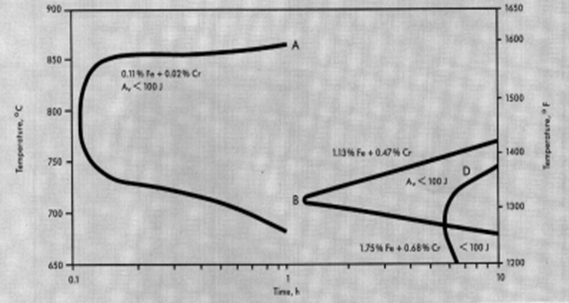
6. Hastelloy B2 (N10665, 2.4617) Hastelloy time-temperature-sensitization curve:
| 7. Maximum allowable stress value of Hastelloy B2 (N10665, 2.4617) Hastelloy tensile test (ASME UNF-23.3, SB 333): | |||||||||||
| Temperature℃ | Maximum allowable stress N/mm2 | 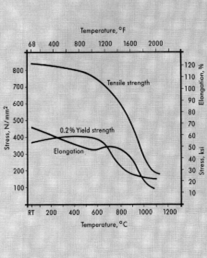 | |||||||||
| 38 | ① | ①② | |||||||||
| 93 | |||||||||||
| 100 | 190 | 190 | |||||||||
| 149 | |||||||||||
| 200 | 190 | 190 | |||||||||
| 204 | |||||||||||
| 260 | |||||||||||
| 300 | 188 | 188 | |||||||||
| 316 | |||||||||||
| 371 | |||||||||||
| 400 | 180 | 180 | |||||||||
| 427 | |||||||||||
| ① Metric values depend on interpolation parameters ②Conditional stress value | |||||||||||
8. Hastelloy B2 (N10665, 2.4617) alloy condition stress value:
In applications where slightly larger deformations are allowed, larger conditional stress values up to 90% of the yield strength value at the corresponding temperature can be selected. These stresses can cause dimensional changes as permanent strains occur and are therefore not recommended for flanged and sealed connections.
9. Hastelloy B2 (N10665, 2.4617) alloy metallographic structure:
Hastelloy B-2 has a face-centered cubic lattice structure. By controlling the iron and chromium content to a minimum, it reduces processing brittleness and blocks the precipitation of the Ni4Mo phase at 700-870°C.
10. Corrosion resistance of Hastelloy B2 (N10665, 2.4617) alloy:
Nickel-molybdenum alloy B-2 has extremely low carbon and silicon content, which reduces the precipitation of carbon and other impurity phases in the welding heat-affected zone, so its welds also have sufficient corrosion resistance. Alloy B-2 has good corrosion resistance in reducing media, such as hydrochloric acid solutions of various temperatures and concentrations. It also has good corrosion resistance in moderately concentrated sulfuric acid solutions (or containing a certain amount of ammonia ions). It can also be used in acetic acid and phosphoric acid environments. Alloy materials can have the best corrosion resistance only when they are in a suitable metallographic state and pure crystal structure. Compared with Hasteloy B-2, the newly developed Hastelloy B-4, in addition to having the same resistance to general corrosion and intergranular corrosion, further improves the resistance to stress corrosion cracking, and the resistance to sensitization is also improved.
2. Application scope of Hastelloy B2 (N10665, 2.4617) Hastelloy:
Hastelloy B-2 is widely used in the chemical, petrochemical, energy manufacturing and pollution control fields, especially in the sulfuric acid, hydrochloric acid, phosphoric acid, acetic acid and other industries. If used in special fields, please consult the data supplier.
3. Hastelloy B2 (N10665, 2.4617) Hastelloy processing and heat treatment:
1. Hastelloy B2 (N10665, 2.4617) Hastelloy heating:
(1) It is very important to keep the workpiece clean and pollution-free before and during heat treatment.
(2) Do not come into contact with hydrocarbons, phosphorus, lead and other low melting point metals during the heating process, otherwise it will damage the performance of the alloy and make Hasteloy B-2 brittle. Pay attention to remove stains such as marking paint, temperature indicating paint, colored crayons, chalk, lubricating oil, various liquids and oil stains, fuel and other stains.
(3) The lower the sulfur content in fuel, the better. The total sulfur content in gas and liquefied petroleum gas should be less than 0.1%. The sulfur content in city gas should not exceed 0.25g/m3 at most. The sulfur content in fuel oil should be no more than 0.25g/m3. Should be less than 0.5%.
(4) The furnace gas must be clean and slightly reducing. The furnace gas should be kept away from fluctuations between oxidizing and reducing properties. The heating flame cannot be directly burned toward the workpiece.
(5) Heating should be done as quickly as possible to the required temperature.
2. Hastelloy B2 (N10665, 2.4617) Hastelloy alloy hot processing:
(1) The thermal processing temperature range of Hastelloy B-2 is 1160℃~900℃, and the cooling pipe is water quenched.
(2) In order to ensure the best anti-corrosion performance, annealing should be performed after hot processing.
(3) During thermal processing, the workpiece should be directly added to the heated heat treatment furnace.
3. Hastelloy B2 (N10665, 2.4617) Hastelloy cold processing:
(1) Cold working must be carried out in the solution annealed state.
(2) The work hardening rate of Hastelloy B-2 is greater than that of austenitic stainless steel, so the processing equipment needs to be adjusted accordingly. There should be intermediate annealing during cold working.
(3) If the cold rolling deformation is greater than 15%, the workpiece needs to be solution treated before use."
4. Hastelloy B2 (N10665, 2.4617) Hastelloy heat treatment:
(1) The solution treatment temperature range of Hastelloy B-2 is 1060℃~1080℃.
(2) For materials with a thickness greater than 1.5mm, it is recommended to use cooling pipes for water quenching or rapid air cooling to ensure the best corrosion resistance.
(3) During all heat treatment processes, attention should be paid to complying with the aforementioned matters that must keep the workpiece clean."
5. Hastelloy B2 (N10665, 2.4617) Hastelloy alloy deoxidation:
(1) The surface oxide, oxidation color and welding slag around the weld of Hastelloy B-2 have stronger adhesion than stainless steel. It is recommended to use a fine-grained abrasive belt or fine-grained grinding wheel for grinding.
(2) Before pickling, use sandblasting or careful grinding to break up the oxide.
(3) Use HNO3/HF mixed acid for pickling at appropriate time and temperature. Due to the sensitivity of the alloy to oxidizing media, weight loss of the alloy may occur along with the formation of greater amounts of ammonia-containing gases."
6. Hastelloy B2 (N10665, 2.4617) Hastelloy alloy machining:
Hastelloy B-2 should be machined after annealing. Due to the high work hardening rate of the material, it is advisable to use lower cutting speeds and heavy feeds than when processing low-alloy standard solid stainless steel to achieve cold work hardening. below the surface.
4. Hastelloy B2 (N10665, 2.4617) Hastelloy welding:
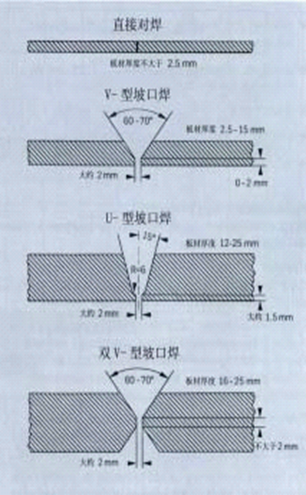
1. Hasteloy B-2 alloy can be welded by tungsten electrode shielded gas welding (GTAW/TIG) or under certain circumstances, gas shielded arc welding (SMAW/MMA). The material to be welded should be in an annealed state, and oxide scale, oil stains and various markings and marks should be removed. The approximately 25mm wide area of the base metal on both sides of the weld must be polished to bright metal. The thermal conductivity of Hastelloy B-2 is lower than that of steel. When using a single V-shaped welding interface, the angle should be 70°, low heat input should be used, and the interlayer temperature should not exceed 120°C. The oxidized color can be brushed off while the weld is still hot. Some applications require post-weld heat treatment to eliminate residual stress and improve resistance to stress corrosion cracking. In order to obtain the best corrosion resistance, it is recommended to use arc welding, namely tungsten electrode inert gas shielded welding GTAW.
2. Hastelloy B-2 alloy welding filler metal: commonly used filler metal: welding wire: ERNiMo-7, welding rod: ENiMo-7. Only by using this kind of welding electrode can the precipitation of carbon and silicon be avoided or minimized. As shown below:
In applications where slightly larger deformations are allowed, larger conditional stress values up to 90% of the yield strength value at the corresponding temperature can be selected. These stresses can cause dimensional changes as permanent strains occur and are therefore not recommended for flanged and sealed connections.
9. Hastelloy B2 (N10665, 2.4617) alloy metallographic structure:
Hastelloy B-2 has a face-centered cubic lattice structure. By controlling the iron and chromium content to a minimum, it reduces processing brittleness and blocks the precipitation of the Ni4Mo phase at 700-870°C.
10. Corrosion resistance of Hastelloy B2 (N10665, 2.4617) alloy:
Nickel-molybdenum alloy B-2 has extremely low carbon and silicon content, which reduces the precipitation of carbon and other impurity phases in the welding heat-affected zone, so its welds also have sufficient corrosion resistance. Alloy B-2 has good corrosion resistance in reducing media, such as hydrochloric acid solutions of various temperatures and concentrations. It also has good corrosion resistance in moderately concentrated sulfuric acid solutions (or containing a certain amount of ammonia ions). It can also be used in acetic acid and phosphoric acid environments. Alloy materials can have the best corrosion resistance only when they are in a suitable metallographic state and pure crystal structure. Compared with Hasteloy B-2, the newly developed Hastelloy B-4, in addition to having the same resistance to general corrosion and intergranular corrosion, further improves the resistance to stress corrosion cracking, and the resistance to sensitization is also improved.
2. Application scope of Hastelloy B2 (N10665, 2.4617) Hastelloy:
Hastelloy B-2 is widely used in the chemical, petrochemical, energy manufacturing and pollution control fields, especially in the sulfuric acid, hydrochloric acid, phosphoric acid, acetic acid and other industries. If used in special fields, please consult the data supplier.
3. Hastelloy B2 (N10665, 2.4617) Hastelloy processing and heat treatment:
1. Hastelloy B2 (N10665, 2.4617) Hastelloy heating:
(1) It is very important to keep the workpiece clean and pollution-free before and during heat treatment.
(2) Do not come into contact with hydrocarbons, phosphorus, lead and other low melting point metals during the heating process, otherwise it will damage the performance of the alloy and make Hasteloy B-2 brittle. Pay attention to remove stains such as marking paint, temperature indicating paint, colored crayons, chalk, lubricating oil, various liquids and oil stains, fuel and other stains.
(3) The lower the sulfur content in fuel, the better. The total sulfur content in gas and liquefied petroleum gas should be less than 0.1%. The sulfur content in city gas should not exceed 0.25g/m3 at most. The sulfur content in fuel oil should be no more than 0.25g/m3. Should be less than 0.5%.
(4) The furnace gas must be clean and slightly reducing. The furnace gas should be kept away from fluctuations between oxidizing and reducing properties. The heating flame cannot be directly burned toward the workpiece.
(5) Heating should be done as quickly as possible to the required temperature.
2. Hastelloy B2 (N10665, 2.4617) Hastelloy alloy hot processing:
(1) The thermal processing temperature range of Hastelloy B-2 is 1160℃~900℃, and the cooling pipe is water quenched.
(2) In order to ensure the best anti-corrosion performance, annealing should be performed after hot processing.
(3) During thermal processing, the workpiece should be directly added to the heated heat treatment furnace.
3. Hastelloy B2 (N10665, 2.4617) Hastelloy cold processing:
(1) Cold working must be carried out in the solution annealed state.
(2) The work hardening rate of Hastelloy B-2 is greater than that of austenitic stainless steel, so the processing equipment needs to be adjusted accordingly. There should be intermediate annealing during cold working.
(3) If the cold rolling deformation is greater than 15%, the workpiece needs to be solution treated before use."
4. Hastelloy B2 (N10665, 2.4617) Hastelloy heat treatment:
(1) The solution treatment temperature range of Hastelloy B-2 is 1060℃~1080℃.
(2) For materials with a thickness greater than 1.5mm, it is recommended to use cooling pipes for water quenching or rapid air cooling to ensure the best corrosion resistance.
(3) During all heat treatment processes, attention should be paid to complying with the aforementioned matters that must keep the workpiece clean."
5. Hastelloy B2 (N10665, 2.4617) Hastelloy alloy deoxidation:
(1) The surface oxide, oxidation color and welding slag around the weld of Hastelloy B-2 have stronger adhesion than stainless steel. It is recommended to use a fine-grained abrasive belt or fine-grained grinding wheel for grinding.
(2) Before pickling, use sandblasting or careful grinding to break up the oxide.
(3) Use HNO3/HF mixed acid for pickling at appropriate time and temperature. Due to the sensitivity of the alloy to oxidizing media, weight loss of the alloy may occur along with the formation of greater amounts of ammonia-containing gases."
6. Hastelloy B2 (N10665, 2.4617) Hastelloy alloy machining:
Hastelloy B-2 should be machined after annealing. Due to the high work hardening rate of the material, it is advisable to use lower cutting speeds and heavy feeds than when processing low-alloy standard solid stainless steel to achieve cold work hardening. below the surface.
4. Hastelloy B2 (N10665, 2.4617) Hastelloy welding:
1. Hasteloy B-2 alloy can be welded by tungsten electrode shielded gas welding (GTAW/TIG) or under certain circumstances, gas shielded arc welding (SMAW/MMA). The material to be welded should be in an annealed state, and oxide scale, oil stains and various markings and marks should be removed. The approximately 25mm wide area of the base metal on both sides of the weld must be polished to bright metal. The thermal conductivity of Hastelloy B-2 is lower than that of steel. When using a single V-shaped welding interface, the angle should be 70°, low heat input should be used, and the interlayer temperature should not exceed 120°C. The oxidized color can be brushed off while the weld is still hot. Some applications require post-weld heat treatment to eliminate residual stress and improve resistance to stress corrosion cracking. In order to obtain the best corrosion resistance, it is recommended to use arc welding, namely tungsten electrode inert gas shielded welding GTAW.
2. Hastelloy B-2 alloy welding filler metal: commonly used filler metal: welding wire: ERNiMo-7, welding rod: ENiMo-7. Only by using this kind of welding electrode can the precipitation of carbon and silicon be avoided or minimized. As shown below:
| 5. Hastelloy B2 (N10665, 2.4617) variety specifications and supply status: | ||||||||
| Shanghai Disheng Special Alloy can produce various specifications of Hastelloy B2 seamless pipes, Hastelloy B2 steel plates, Hastelloy B2 round bars, Hastelloy B2 forgings, Hastelloy B2 flanges, Hastelloy B2 rings, Hastelloy B2 welded pipes, Hastelloy B2 steel strips, Hastelloy B2 wire and supporting welding materials. |
| Variety classification | delivery status | |||||||
| Seamless tube | Solid solution + acid white, length can be customized | |||||||
| plate | Solid solution, pickling, trimming | |||||||
| welded pipe | Solid solution acid whitening + RT% flaw detection | |||||||
| Forgings | Annealing + polishing | |||||||
| Rod | Forged state, surface polished or polished | |||||||
| strip | Cold rolled, solid solution soft state, descaled delivery | |||||||
| wire material | Delivered in solid solution pickled disc shape or straight strip shape, solid solution straight strip in fine polished state | |||||||


